A higher-number carbon fiber grade does not always mean better performance.
In the development of carbon-fiber components, many engineers see grades such as T300, T700 and T1000, and may immediately think: since T1000 delivers higher strength, would T1000 be the best direct choice?
Real-world projects are rarely that straightforward.
If a carbon-fiber drive shaft made with T700 already meets requirements for strength, stiffness and safety factor, switching to T1000 will likely raise material costs and processing demands without delivering proportionate improvements in product performance. For this reason, carbon-fiber material selection prioritizes suitability over simply chasing higher grades.
What Are the Differences Among T300, T700 and T1000?
Grade | Tensile Strength (MPa) | Tensile Modulus (GPa) | Elongation at Break (%) | Density (g/cm³) |
T300 | 3530 | 230 | 1.5% | 1.76 |
T700 | 4900 | 240 | 2.0% | 1.79 |
T1000 | 6370 | 294 | 2.2% | 1.80 |
T300: Well-proven performance at relatively favourable cost. Suitable for general structural parts with moderate strength requirements and cost sensitivity. It is not a “low-end material”, but a fully viable option for many applications.
T700: Balanced strength and overall performance. Widely adopted in automotive, robotics, industrial equipment and sporting goods. For most projects balancing strength, weight and cost, T700 is usually the first grade to evaluate.
T1000: Higher tensile strength and modulus. Ideal for applications demanding aggressive structural weight reduction and superior material performance. However, it comes with substantially higher cost and is unnecessary for many projects.
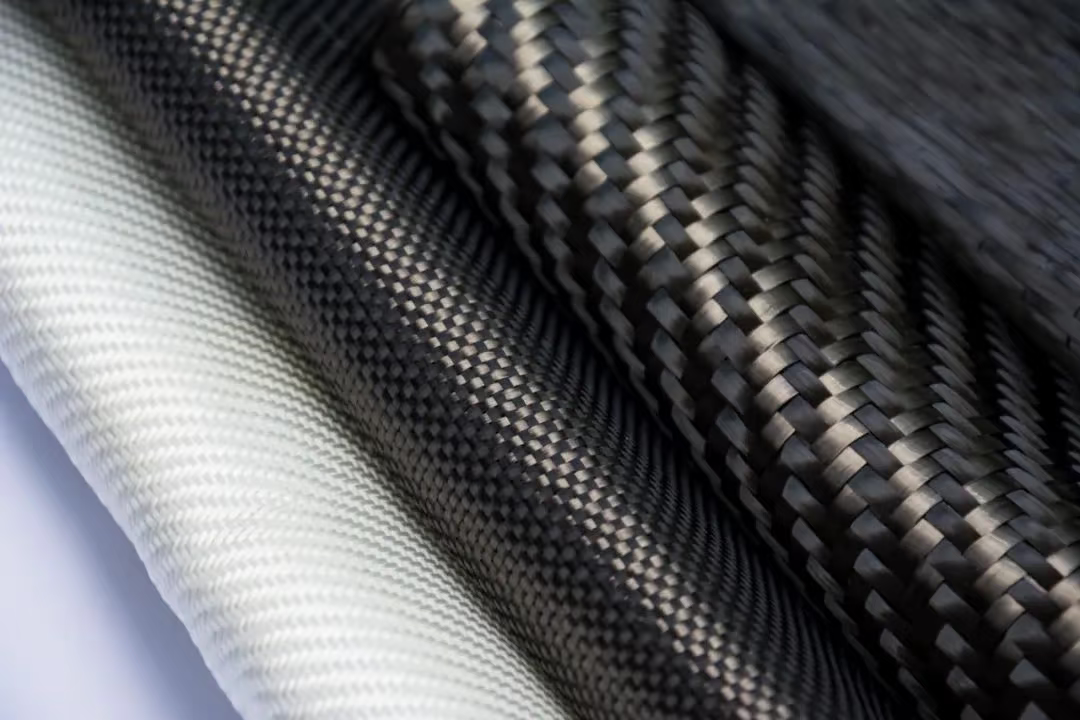
The final performance of carbon-fiber composites depends on more than fiber grade alone. The resin system governs stiffness, temperature resistance and impact resistance. Laminate lay-up design defines how fibers bear multi-directional loads. Moulding and manufacturing processes directly govern finished-part consistency and quality.
A well-designed, properly manufactured component using T700 composite can outperform a poorly designed T1000 part in practical service.
When selecting materials, define load conditions, weight targets, operating environment and safety requirements first, then choose the appropriate fiber grade — do not fix on a grade at the outset.
With over 20 years of R&D and manufacturing experience in carbon-fiber composites, GBTECH supplies carbon-fiber sheets, tubes and custom structural components across T300 to T1000 grades.
We help customers select suitable materials and lay-up schemes according to application scenarios, mechanical requirements and budget. Services include CNC machining, compression moulding, autoclave processing and custom manufacturing.
The core principle for carbon-fiber selection is not picking the highest grade, but striking a sensible balance among performance, cost and processing complexity.
If you are developing carbon-fiber sheets, tubes or custom structural parts and unsure which grade fits your project, please contact GBTECH. Our engineering team will assess suitable material and structural solutions based on your application, mechanical specifications and budget.
marketing@gbtechgroup.cn
Official GBTECH Websites:
EMail: zane@gbtechgroup.cn
Phone: +1 (510)902-9987
www.gbtechgroup.cn | www.gbtechcomposites.com | www.gbtechmaterials.com
US.Office: 38758 Buckboard Common, Fremont, CA 94536, United States
China Head Quaters: Building 1, Left Side, Tangye Road, Xinxu, Huiyang, Huizhou, China


 WhatsApp
 E-mail