Define Application Requirements First
Before reaching out to any supplier, define what the part actually needs to do. What are the load cases? Will it operate in extreme cold? What is the weight target? Many engineers make the mistake of sending only dimensions and expecting the manufacturer to fill in the blanks. That leads to overbuilt parts, missed weight targets, or field failures.
For example, a robotic arm joint sees cyclic fatigue loads very differently than an aerospace bracket that handles static thrust. Low-temperature performance deserves special attention—resin systems that work well at room temperature may become brittle in extreme cold. That needs to be discussed upfront, not discovered during testing.
GBTECH's engineering team begins every project with a structured requirements review. They ask about operating environment, loading spectrum, and production volume before recommending any material or process. That is what real design support looks like—not just taking an order, but helping you get the specification right from day one.
Select the Right Material Grade
Not all carbon fiber is the same. T300, T700, and T800 grades offer different tensile strengths and moduli. The common mistake is defaulting to the highest grade available, driving up cost without delivering real benefit.
For non-structural cosmetic parts, T300 may be entirely adequate. For a structural component requiring stiffness, T700 or T800 becomes relevant—but the resin system matters just as much. Epoxy, vinyl ester, and thermoplastic matrices each have different toughness, temperature limits, and processing behavior.
A good carbon fiber manufacturer will have a material selection framework and be able to explain trade-offs in plain engineering terms. Avoid suppliers that simply say "we can do anything"—that often means they don't understand the material well enough to guide you.
Consider Manufacturing Process Early
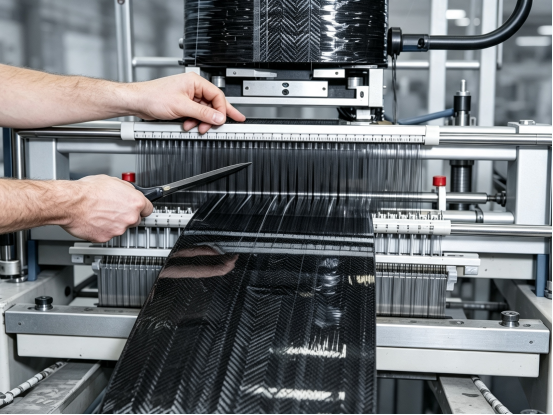
The geometry of your part dictates the manufacturing process, not the other way around. Filament winding works for hollow cylinders. Autoclave prepreg is ideal for high-performance panels. Pultrusion is efficient for constant cross-sections. CNC machining handles finishing and trimming.
Too many engineers finalize a design and then ask "how do we make this?" That is backwards. A feature that requires five-axis machining on a cured composite part might be eliminated with a simple split-line change in the tooling design. GBTECH operates multiple processes—autoclave, filament winding, pultrusion, and CNC finishing—so they can evaluate manufacturability at the design stage rather than after the mold is cut. That flexibility saves time and cost in development.
Prototype vs Production Are Different
A part that passes functional testing as a one-off prototype is not guaranteed to be manufacturable at volume. Prototype tooling often uses soft molds that allow undercuts and zero draft angles. Production tooling in steel or aluminum requires proper draft, split lines, and clearance for extraction.
Surface finish requirements also shift. A prototype can be hand-sanded and touched up. Production parts need repeatable surface quality with minimal secondary operations. A capable carbon fiber prototype provider will flag these issues early and propose modifications that preserve function while enabling cost-effective production. Ask your supplier how they transition from prototype to production tooling—if they don't have a clear answer, that is a red flag.
Choose a Supplier with Engineering Capability
The most expensive mistake is choosing a supplier that can only process materials, not understand them. A true carbon fiber component supplier should offer more than quotes and delivery dates. They should push back when a design is not manufacturable. They should recommend materials you hadn't considered. They should explain their quality controls: NDT methods, cure cycle validation, dimensional inspection.
Supply chain reliability is a practical concern for many engineering teams. GBTECH maintains ISO 9001 certification and operates global logistics from facilities in China ,Russia and the US, with established export channels. Their engineering team works directly with clients to address durability and performance requirements for harsh environments.
Whether your application is in aerospace, robotics, or industrial equipment, the same question applies: can this supplier support you from design through production? If they only take orders and make parts, keep looking. The best partners are the ones who challenge your assumptions and improve your design.
Official GBTECH Websites:
E-Mail: zane@gbtechgroup.cn
Phone: +1 (510)902-9987
www.gbtechgroup.cn | www.gbtechcomposites.com | www.gbtechmaterials.com
US.Office: 38758 Buckboard Common, Fremont, CA 94536, United States
China Head Quaters: Building 1, Left Side, Tangye Road, Xinxu, Huiyang, Huizhou, China


 WhatsApp
 E-mail